
Trading-oriented crude profile

Mars

Mars · United States · medium sour

Mars

Mars

Snapshot

FamilyCrude oil
Typical qualitymedium sour
API gravity28.5
Sulfurhigh sulfur
Primary originUnited States
Producing areaUS Gulf Coast offshore and Clovelly-linked system
Benchmark contextUSGC sour waterborne pricing

Mars is a named crude stream from United States. Refiners, traders and analysts follow it because the name stands for a repeatable commercial reference in the Americas market.

Commercial users evaluate the grade through density, sulfur, residue behaviour, metals, acidity and logistics. The stream is generally described as medium sour. Typical market markers are around 28.5 API and high sulfur% sulfur.

Why this grade matters

Commercial notes

Production and export geography is centred on US Gulf Coast offshore and Clovelly-linked system. Price formation depends on the benchmark context shown in the snapshot. That linkage matters for term business, substitution value, arbitrage windows and freight-adjusted netbacks.

Method note

Operationally, professionals watch cargo size, heating and blending needs, terminal constraints, draft limits and discharge flexibility. Because some crude names refer to fields, blends or export systems, the market treats a grade as a commercial family with a terminal norm rather than as an immutable laboratory constant.

This page is written as a commercial market profile. Indicative assay values can vary by field mix, cargo, season, terminal, contract specification and updating of the export stream.

Related grades

light sweet

WTI Light

United States · WTI / Cushing benchmark

Open profile

light sweet

Louisiana Light Sweet

United States · US Gulf Coast light sweet pricing

Open profile

light sweet

Bakken

United States · WTI-linked inland pricing

Open profile

heavy sour

Western Canadian Select

Canada · WCS heavy discount structure

Open profile

Detailed commercial reading

Density and sulfur position

This grade is read through its density, sulfur range, residue behaviour and benchmark linkage. Those variables shape refinery intake planning, hydrotreating load and the relative value of the stream against nearby alternatives.

28.5 API · high sulfur S · medium sour

Refinery fit and basket logic

Refinery interest depends on sulfur load, hydrogen balance, residue handling, diesel yield and marine fuel strategy. Buyers rarely read a grade in isolation; they read it inside a wider crude basket and against freight-adjusted alternatives.

Logistics and discharge

Commercial performance depends not only on assay values but also on export system, parcel size, blending tolerance, terminal routines, heating or viscosity requirements and discharge flexibility at destination.

US Gulf Coast offshore and Clovelly-linked system

Pricing and substitution

Pricing is interpreted through Brent-, WTI- or Dubai/Oman-linked differentials, freight and regional balances. Substitution economics versus similar grades can move faster than the headline benchmark itself.

USGC sour waterborne pricing

Commercial reading and buying logic

Benchmark and price formation

Mars is usually read in the market as a medium sour grade from United States. Commercially, buyers compare its density, sulfur position and benchmark linkage against nearby substitutes, because replacement economics can move faster than headline flat price.

Refinery and yield relevance

With indicative markers around 28.5 API and high sulfur% sulfur, the stream is relevant for refinery cut planning, hydrotreating load, residue handling, diesel yield and freight-adjusted netbacks. Procurement teams also look at terminal discipline, parcel formation, inspection routines and destination flexibility.

Logistics and destination fit

USGC sour waterborne pricing. US Gulf Coast offshore and Clovelly-linked system

Documentation and compliance

Mars · United States · medium sour USGC sour waterborne pricing

Quick questions (search intent)

How is it priced in practice?

Linked benchmark / reference: USGC sour waterborne pricing.

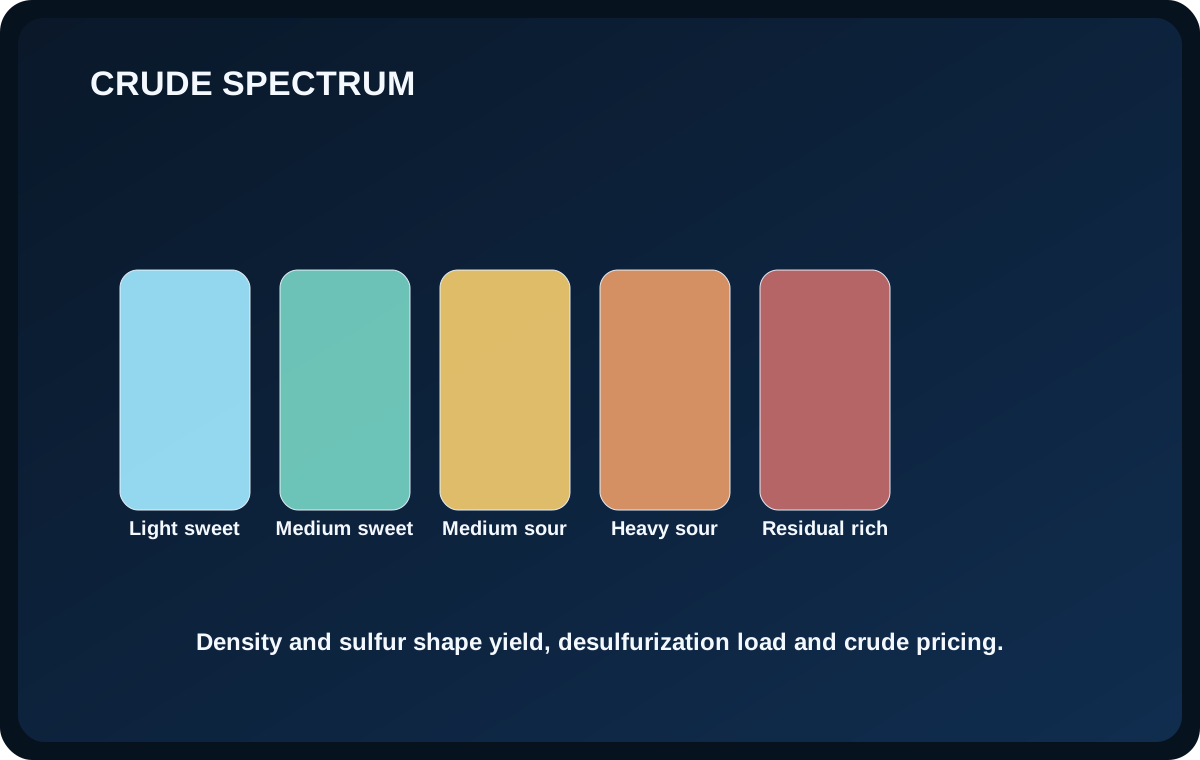
Where does it sit in the crude spectrum?

Indicative position: unclassified.

What should a buyer check before lifting?

Confirm contract spec, inspection method, loading terminal routines, document pack, sanctions/compliance screening and freight/discharge constraints.

What are realistic substitutes?

Use the substitution set below and compare delivered economics (differential + freight), not only headline benchmark moves.