
Export terminals, loading corridors and seaborne crude systems

Export terminals, loading corridors and seaborne crude systems

A crude grade is not only an assay. It is also a loading window, parcel size and freight position.

Export terminals, loading corridors and seaborne crude systems

Market overview

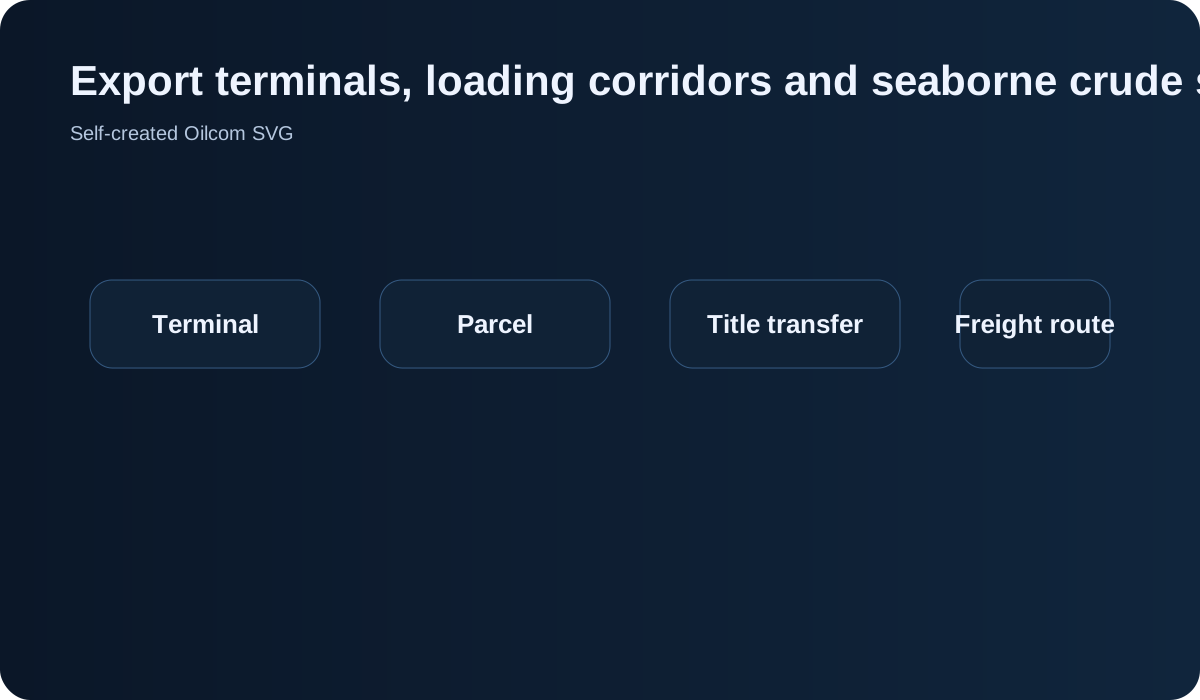
A terminal system shapes title transfer, parcel formation, loading windows, draft restrictions, tank availability, inspection routines and freight optionality. Traders therefore evaluate terminals not as background logistics, but as part of the commercial identity of the barrel.

Commercial teams compare stream stability, recurring export cadence, destination markets and substitution value versus nearby grades. Origin knowledge matters because a named grade is bought together with its route to market, terminal logic and benchmark linkage.
Pricing and substitution

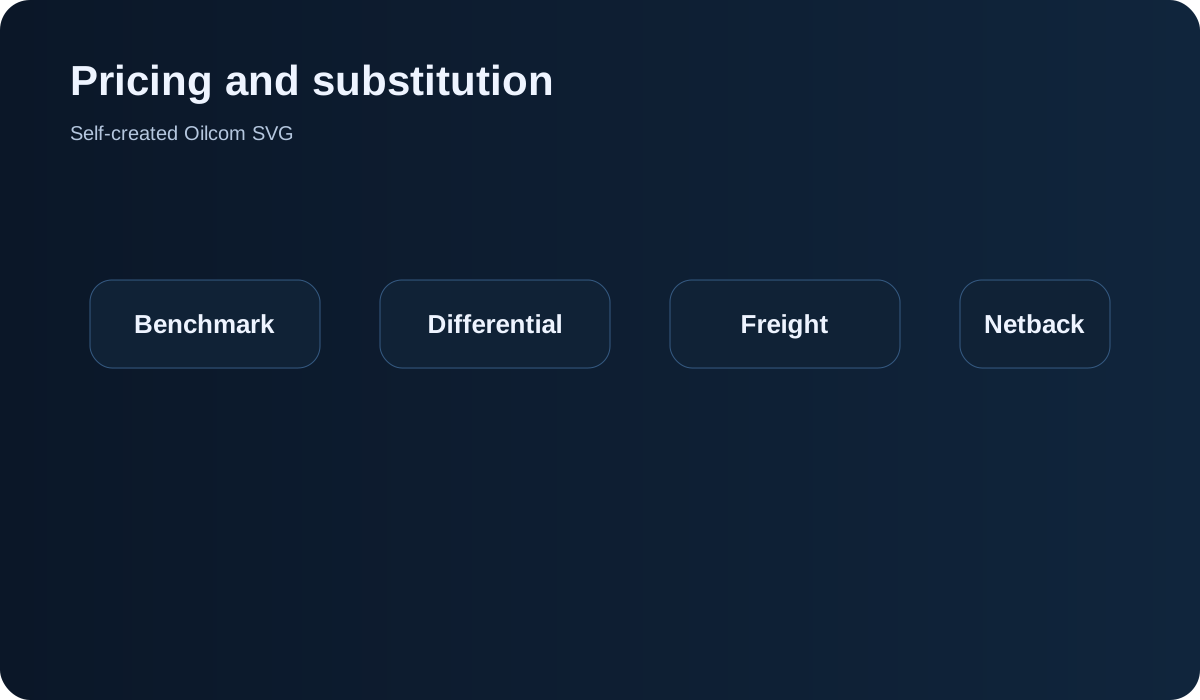
API gravity, sulfur, residue behaviour and refinery fit determine how traders and refiners read a named grade.

Related export systems

Saudi Arabia

Ras Tanura and Yanbu export system

Arab Extra Light, Arab Light, Arab Medium, Arab Heavy

Open system

United Arab Emirates

Fujairah and Das Island corridor

Murban, Das Blend, Upper Zakum

Open system

Iraq

Basrah Oil Terminal system

Basrah Medium, Basrah Heavy

Open system

Azerbaijan / Mediterranean

BTC and Ceyhan export route

Azeri BTC, Azeri Light

Open system

Kazakhstan / Black Sea

Novorossiysk and CPC route

CPC Blend

Open system

Russia / Pacific

De-Kastri and Sakhalin route

Sokol

Open system

Nigeria

Bonny, Forcados and Qua Iboe systems

Bonny Light, Forcados, Qua Iboe, Bonga

Open system

Angola

Angola offshore FPSO export corridor

Girassol, Dalia, Hungo Blend, Pazflor

Open system

United States

US Gulf Coast and LOOP-linked market

WTI Light, Mars, Louisiana Light Sweet, Bakken

Open system

Canada

Western Canada export and blending system

Western Canadian Select, Cold Lake Blend, Kearl

Open system

Canada

East Canada offshore export system

Hibernia Blend, Hebron

Open system

United Kingdom / Norway

North Sea terminal system

Brent Blend, Forties Blend, Ekofisk Blend, Oseberg Blend

Open system

Mexico

Mexico Gulf export system

Maya, Isthmus, Olmeca

Open system

Guyana

Guyana FPSO export chain

Liza, Unity Gold, Payara Gold

Open system

Malaysia

Malaysia Labuan and Kimanis corridor

Tapis, Kimanis

Open system

Indonesia

Indonesia East Kalimantan export system

Attaka, Duri, Banyu Urip

Open system

China

China domestic crude stream system

Daqing, Shengli

Open system

Vietnam

Vietnam offshore export system

Bach Ho

Open system

Papua New Guinea

Papua New Guinea Kutubu system

Kutubu Blend

Open system

Algeria

Algeria Saharan export system

Saharan Blend

Open system

Related guides

World crude map: origins, countries and representative grades

A visual atlas of where named crude streams come from, grouped by producing countries and export regions.

Open page

Marine gasoil vs VLSFO: specs, blend stability and claims

Marine fuel buying depends on sulfur caps, stability, compatibility and the practical discipline of sampling, claims handling and onboard use.

Open guide

Route economics and Incoterms: from FOB headlines to delivered value

A cargo can look cheap on paper and still disappoint after freight, timing, demurrage and documentary friction are added.

Open guide

Deep-dive infrastructure and market mechanics

SEO-focused specialist pages on pipelines, export hubs, benchmarks, tanker classes and refinery complexity.

Pipeline systems, nominations and terminal interfaces

How gathering lines, trunk pipelines, tariffs, linefill and terminal interfaces shape crude availability and market optionality.

Open page

Export hubs, berths and port-side crude optionality

A commercial guide to berth availability, draft constraints, storage turns, inspection timing and the role of export hubs in crude price discovery.

Open page

Benchmark relationships, spreads and differential logic

A practical guide to how Brent-, WTI-, Dubai/Oman- and cargo-linked pricing families interact across crude and product flows.

Open page

Tanker classes, parcel size and voyage economics

How Aframax, Suezmax, VLCC and smaller product-tanker categories change route economics, storage logic and crude placement.

Open page

Refinery complexity, yield value and crude fit

Why API gravity, sulfur, residue upgrading, hydrogen balance and product cracks determine how a refinery values one grade versus another.

Open page