
Capacity and tariffs
Capacity is not just nameplate throughput; maintenance windows, drag reducers, batching discipline and terminal queues change real availability.
管道系统 会改变整个石油链条中的供应可得性、调和空间、运费敞口、运营风险以及价格形成。
本页把基础设施、规格、物流与交易行为放在同一框架下,帮助买方、卖方、租船方和炼厂把市场读成一个系统,而不是零散新闻。
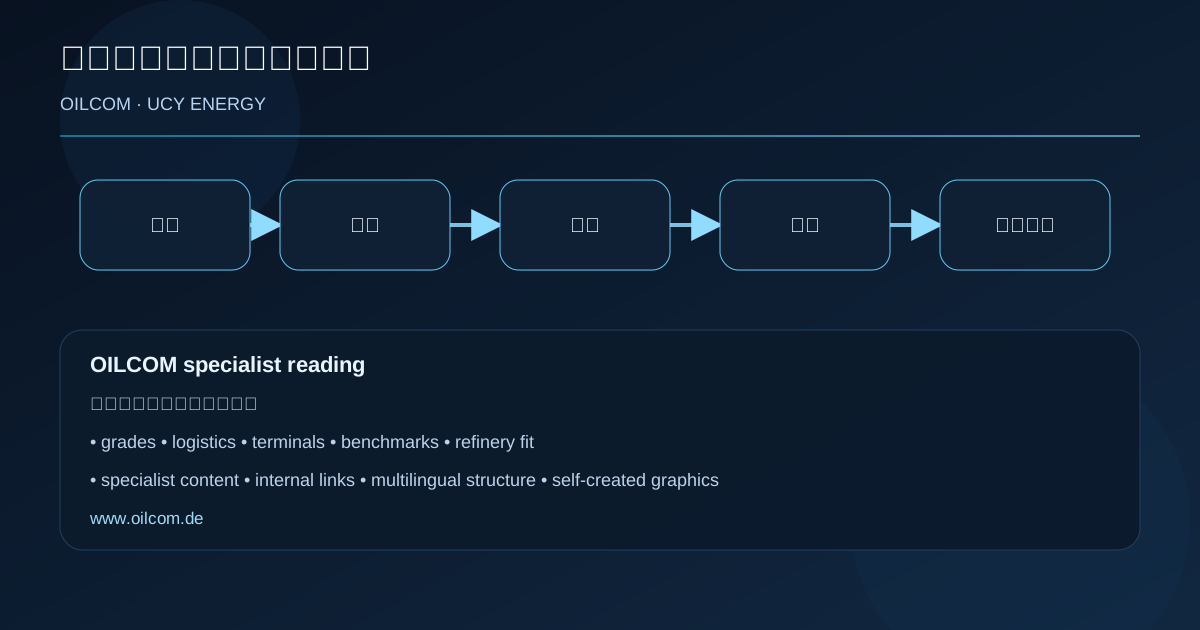
自制图形突出展示了采购、货盘计划、提名、库存控制和下游投放中常见的重要流程与决策点。
为了 SEO 和专业可读性,文本围绕清晰实体、商业术语、内部链接以及对品种、枢纽、航线和炼厂适配的反复引用来组织。
管道系统、提报与码头接口
Capacity is not just nameplate throughput; maintenance windows, drag reducers, batching discipline and terminal queues change real availability.
Shared systems can flatten field-level differences. Commingling rules determine how much a cargo still behaves like a named grade at discharge.
Storage, metering, heating, sampling and berth sequencing decide whether pipeline barrels can become marine cargo on schedule.
A pipe outage can reprice nearby grades, widen differentials and suddenly re-route crude toward rail, truck, storage or alternative ports.
Large trunk systems influence inland-to-water differentials and export terminal optionality.
Pipeline bypasses and coastal systems matter when chokepoints or scheduling pressure intensify.
Transit exposure, blending interfaces and terminal timing can dominate the commercial reading.
Even seaborne grades depend on inland evacuation, storage discipline and terminal reliability.
这些简短回答面向商业读者,帮助他们在进入品种、航线或炼厂的细分页面之前先建立快速判断。
Because they control evacuation speed, blending behaviour, terminal access and therefore the effective supply seen by buyers.
Linefill ties up working inventory in the system and affects start-up timing, quality transition and scheduling flexibility.
Field mix, pipeline commingling, seasonal operations and terminal procedures can slightly change how a cargo reads at discharge.
Traders, procurement teams, shipping desks, operations staff and refiners comparing alternative origins or terminal routes.
通过相关阅读路径,可以从总体市场结构继续进入具体原油品种、产地、出口系统和全球地图语境。