
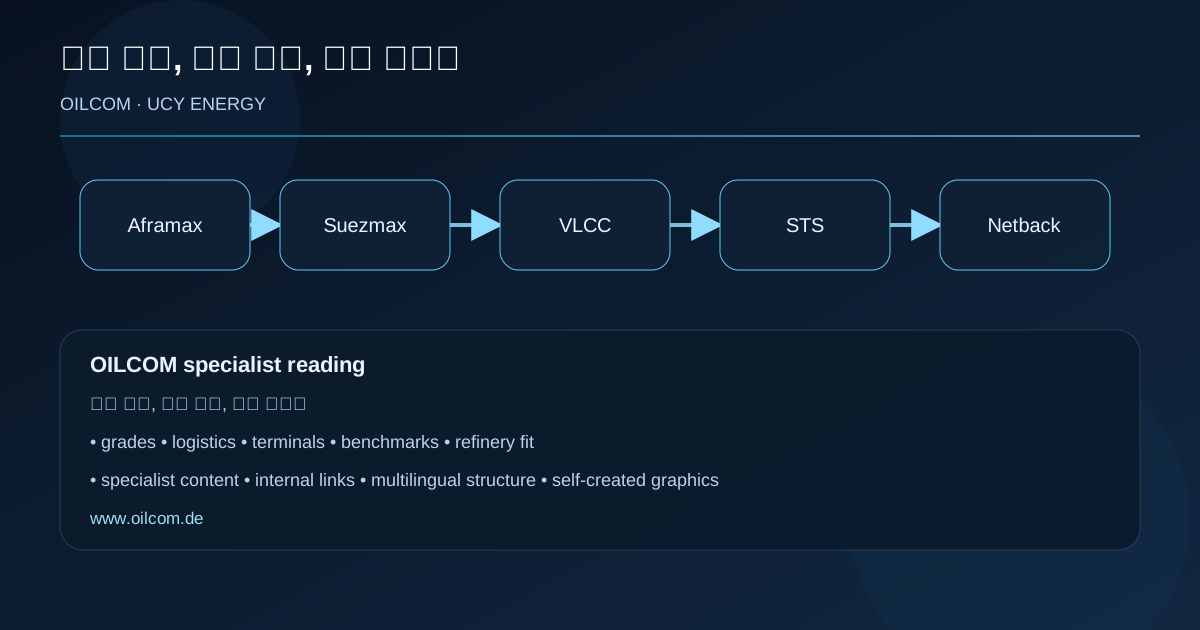
Freight and scale
Larger ships can reduce unit freight on the right route, but they need water depth, berth support and enough cargo concentration.
탱커 클래스는 석유 가치사슬 전반의 가용성, 블렌딩 여지, 운임 노출, 운영 리스크, 가격 형성에 영향을 줍니다.
이 페이지는 인프라, 규격, 물류, 거래 행태를 연결해 구매자, 판매자, 용선자, 정유사가 시장을 개별 뉴스가 아닌 하나의 시스템으로 읽도록 돕습니다.
자체 제작 그래픽은 조달, 화물 계획, 노미네이션, 재고 관리, 다운스트림 배치에서 중요한 운영 순서와 의사결정 지점을 보여줍니다.
SEO와 전문 독자 가독성을 위해 텍스트는 명확한 엔티티, 상업 용어, 내부 링크, 그리고 등급·허브·항로·정유 적합성에 대한 반복 참조를 중심으로 구성했습니다.
탱커 등급, 화물 규모, 항해 경제성
Larger ships can reduce unit freight on the right route, but they need water depth, berth support and enough cargo concentration.
A terminal may be commercially open yet physically restrictive for a specific tanker class or loading programme.
STS can create scale and routing flexibility, but it also adds operational complexity, timing risk and documentary sensitivity.
War-risk, sanctions exposure, weather, canal constraints and regional controls can quickly change the viable vessel class.
Long-haul crude routes often depend on deepwater loading, STS options or hub transfer logic.
Regional routes can reprice rapidly when basin balance or port limits change.
Some logistics chains split between crude tankers and product tankers depending on refinery output and market pull.
Fuel rules and emissions constraints influence operating cost and fleet choice.
이 짧은 답변은 등급별·항로별·정유소별 세부 페이지로 이동하기 전에 빠른 방향성을 원하는 상업 독자를 위해 작성되었습니다.
Because parcel size, draft, route length and freight cost directly change which buyers can economically take a cargo.
STS can bridge draft restrictions, build larger parcels and connect crude to vessel classes that a loading port cannot serve directly.
If transport cost rises or vessel choice narrows, the net value of a grade can fall even when flat price stays stable.
Shipping desks, traders, charterers, analysts and commercial teams comparing route economics and discharge optionality.
관련 읽을거리를 통해 일반 시장 구조에서 명명된 원유 등급, 원산지, 수출 시스템, 세계 지도 맥락으로 이동할 수 있습니다.