
Flat price and basis
The flat-price benchmark sets the hedge axis; the basis shows how physical barrels diverge from paper exposure.
벤치마크 관계는 석유 가치사슬 전반의 가용성, 블렌딩 여지, 운임 노출, 운영 리스크, 가격 형성에 영향을 줍니다.
이 페이지는 인프라, 규격, 물류, 거래 행태를 연결해 구매자, 판매자, 용선자, 정유사가 시장을 개별 뉴스가 아닌 하나의 시스템으로 읽도록 돕습니다.
자체 제작 그래픽은 조달, 화물 계획, 노미네이션, 재고 관리, 다운스트림 배치에서 중요한 운영 순서와 의사결정 지점을 보여줍니다.
SEO와 전문 독자 가독성을 위해 텍스트는 명확한 엔티티, 상업 용어, 내부 링크, 그리고 등급·허브·항로·정유 적합성에 대한 반복 참조를 중심으로 구성했습니다.
벤치마크 관계, 스프레드, 디퍼렌셜 논리
The flat-price benchmark sets the hedge axis; the basis shows how physical barrels diverge from paper exposure.
Differentials and official selling prices translate quality, freight, region and market power into a commercial premium or discount.
Grades that are technically close may still clear differently when benchmark family, freight route or refinery configuration changes.
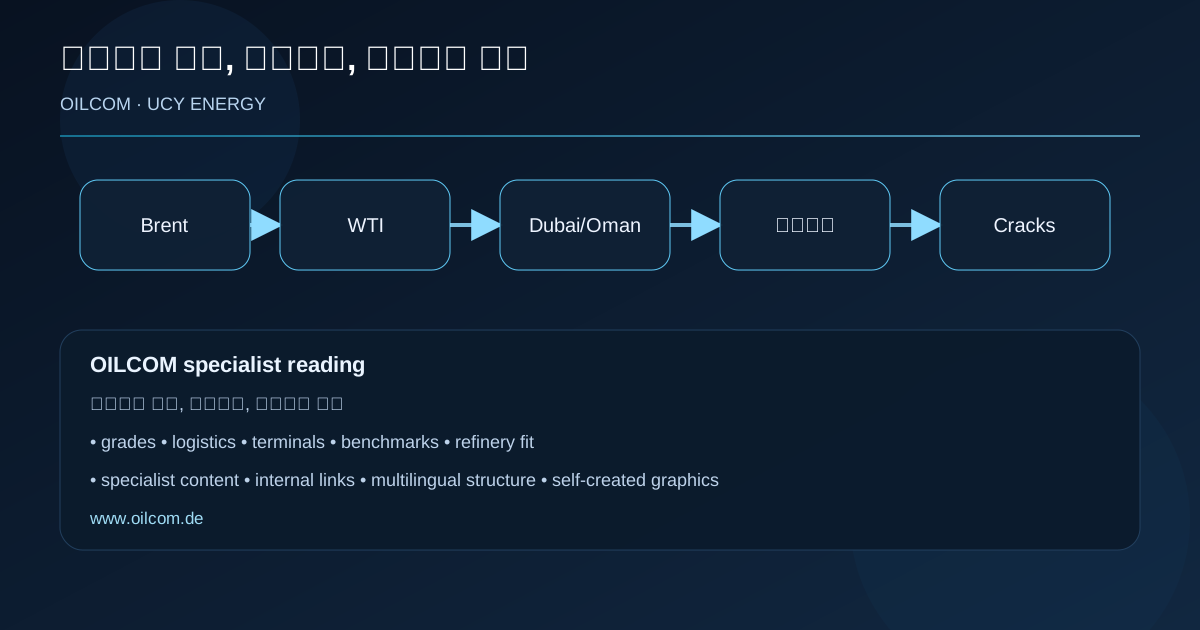
Crude pricing cannot be read in isolation from product cracks, marine fuel demand, middle-distillate balance and refinery yield value.
Brent-related logic influences many light-sweet and waterborne substitution baskets.
WTI-linked pricing interacts with inland logistics, exports and refinery pulling power.
Dubai/Oman-linked structures remain critical where sour crude and Asian demand meet.
Refined-product margins feed back into crude differentials through refinery run economics.
이 짧은 답변은 등급별·항로별·정유소별 세부 페이지로 이동하기 전에 빠른 방향성을 원하는 상업 독자를 위해 작성되었습니다.
Because contracts, hedges, OSP comparisons and substitution decisions are normally built around benchmark families.
It is the commercial premium or discount of a physical barrel versus its chosen benchmark, shaped by quality, route and market balance.
Yes. A refinery configured for sour or heavy barrels may value benchmark-linked grades very differently from a simple refinery.
Trading teams, commercial analysts, refinery planners, procurement desks and readers comparing named grades across regions.
관련 읽을거리를 통해 일반 시장 구조에서 명명된 원유 등급, 원산지, 수출 시스템, 세계 지도 맥락으로 이동할 수 있습니다.