
Freight and scale
Larger ships can reduce unit freight on the right route, but they need water depth, berth support and enough cargo concentration.
船型は価格要因です。フレート、ターミナル適合、STS 利用、喫水制約、貨物サイズ、保険エクスポージャー、実行可能ルート数に影響します。
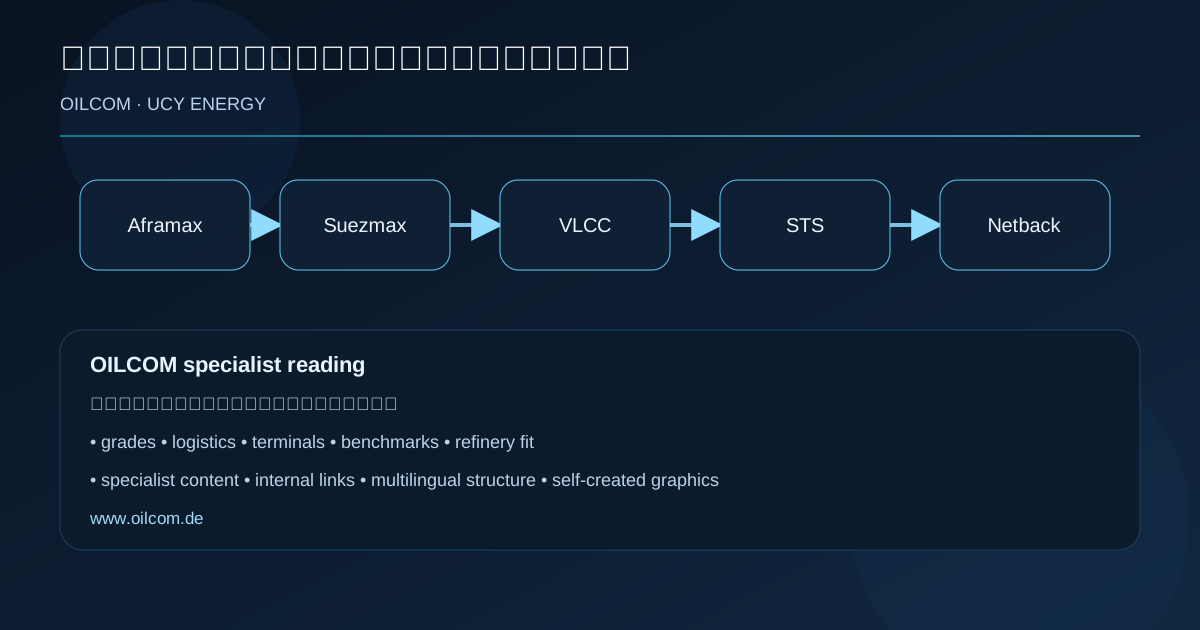
タンカー・クラス は、供給可能量、ブレンディング余地、フレートエクスポージャー、運用リスク、価格形成を石油バリューチェーン全体で左右します。
このページは、インフラ、仕様、物流、取引行動を結び付け、買い手、売り手、用船者、製油所が市場を断片的な見出しではなくシステムとして読めるようにします。
自作グラフィックは、調達、カーゴ計画、ノミネーション、在庫管理、下流配置で重要になる運用順序と意思決定ポイントを示します。
SEO と専門読者の可読性のため、本文は明確なエンティティ、商流用語、内部リンク、グレード・ハブ・ルート・製油所適合性への反復参照で構成しています。
タンカー・クラス、パーセルサイズ、航海経済性
Larger ships can reduce unit freight on the right route, but they need water depth, berth support and enough cargo concentration.
A terminal may be commercially open yet physically restrictive for a specific tanker class or loading programme.
STS can create scale and routing flexibility, but it also adds operational complexity, timing risk and documentary sensitivity.
War-risk, sanctions exposure, weather, canal constraints and regional controls can quickly change the viable vessel class.
Long-haul crude routes often depend on deepwater loading, STS options or hub transfer logic.
Regional routes can reprice rapidly when basin balance or port limits change.
Some logistics chains split between crude tankers and product tankers depending on refinery output and market pull.
Fuel rules and emissions constraints influence operating cost and fleet choice.
これらの短い回答は、グレード別・ルート別・製油所別の詳細ページへ進む前に素早い方向付けを必要とする商業読者向けです。
Because parcel size, draft, route length and freight cost directly change which buyers can economically take a cargo.
STS can bridge draft restrictions, build larger parcels and connect crude to vessel classes that a loading port cannot serve directly.
If transport cost rises or vessel choice narrows, the net value of a grade can fall even when flat price stays stable.
Shipping desks, traders, charterers, analysts and commercial teams comparing route economics and discharge optionality.
関連リンクを使うと、市場構造の全体像から、具体的なグレード、産地、輸出システム、世界マップへ移動できます。