
Flat price and basis
The flat-price benchmark sets the hedge axis; the basis shows how physical barrels diverge from paper exposure.
ベンチマークは単なる名前ではなく、ヘッジ、ディファレンシャル交渉、製油所経済性、グレード代替ロジックの基点です。
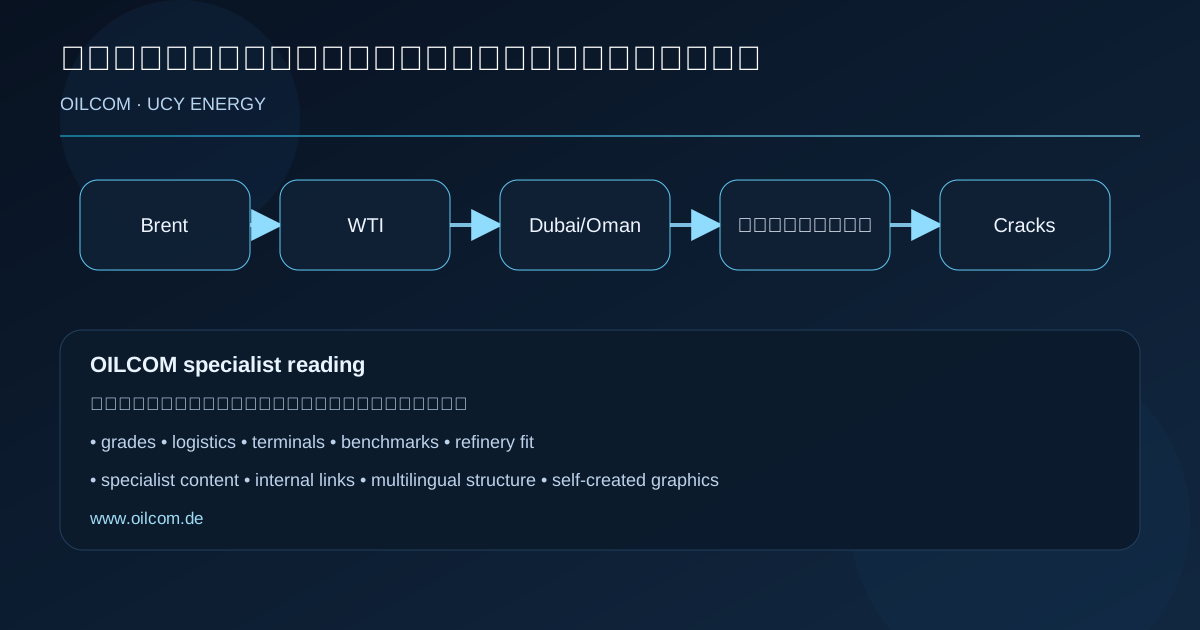
ベンチマーク間の関係 は、供給可能量、ブレンディング余地、フレートエクスポージャー、運用リスク、価格形成を石油バリューチェーン全体で左右します。
このページは、インフラ、仕様、物流、取引行動を結び付け、買い手、売り手、用船者、製油所が市場を断片的な見出しではなくシステムとして読めるようにします。
自作グラフィックは、調達、カーゴ計画、ノミネーション、在庫管理、下流配置で重要になる運用順序と意思決定ポイントを示します。
SEO と専門読者の可読性のため、本文は明確なエンティティ、商流用語、内部リンク、グレード・ハブ・ルート・製油所適合性への反復参照で構成しています。
ベンチマーク関係、スプレッド、ディファレンシャルの論理
The flat-price benchmark sets the hedge axis; the basis shows how physical barrels diverge from paper exposure.
Differentials and official selling prices translate quality, freight, region and market power into a commercial premium or discount.
Grades that are technically close may still clear differently when benchmark family, freight route or refinery configuration changes.
Crude pricing cannot be read in isolation from product cracks, marine fuel demand, middle-distillate balance and refinery yield value.
Brent-related logic influences many light-sweet and waterborne substitution baskets.
WTI-linked pricing interacts with inland logistics, exports and refinery pulling power.
Dubai/Oman-linked structures remain critical where sour crude and Asian demand meet.
Refined-product margins feed back into crude differentials through refinery run economics.
これらの短い回答は、グレード別・ルート別・製油所別の詳細ページへ進む前に素早い方向付けを必要とする商業読者向けです。
Because contracts, hedges, OSP comparisons and substitution decisions are normally built around benchmark families.
It is the commercial premium or discount of a physical barrel versus its chosen benchmark, shaped by quality, route and market balance.
Yes. A refinery configured for sour or heavy barrels may value benchmark-linked grades very differently from a simple refinery.
Trading teams, commercial analysts, refinery planners, procurement desks and readers comparing named grades across regions.
関連リンクを使うと、市場構造の全体像から、具体的なグレード、産地、輸出システム、世界マップへ移動できます。