
Freight and scale
Larger ships can reduce unit freight on the right route, but they need water depth, berth support and enough cargo concentration.
Kelas kapal adalah input harga; kelas kapal memengaruhi freight, kecocokan terminal, penggunaan STS, batas draft, ukuran kargo, eksposur asuransi, dan jumlah rute yang layak.
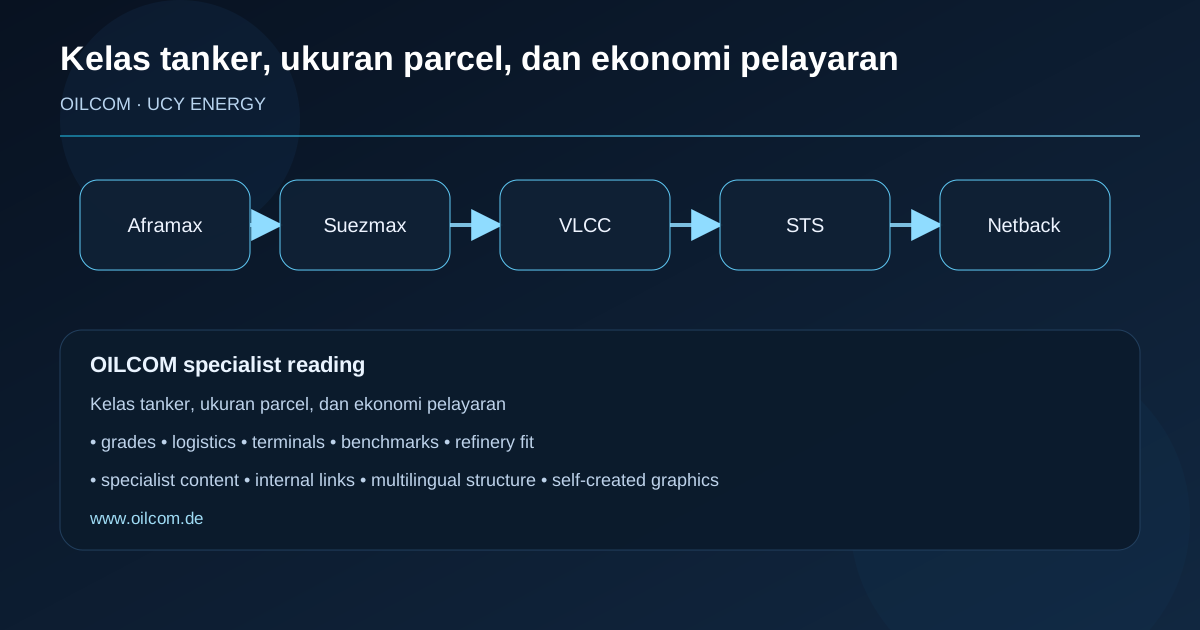
kelas tanker mengubah ketersediaan, ruang blending, eksposur freight, risiko operasional, dan pembentukan harga di seluruh rantai minyak.
Halaman ini menghubungkan infrastruktur, spesifikasi, logistik, dan perilaku perdagangan agar pembeli, penjual, penyewa kapal, dan kilang membaca pasar sebagai sebuah sistem, bukan sekadar kumpulan headline.
Grafik buatan sendiri menyoroti urutan operasional dan titik keputusan utama yang lazim penting untuk pengadaan, perencanaan kargo, nominasi, kontrol persediaan, dan penempatan downstream.
Untuk SEO dan keterbacaan spesialis, teks disusun di sekitar entitas yang jelas, istilah komersial, tautan internal, dan rujukan berulang ke grade, hub, rute, serta kecocokan kilang.
Kelas tanker, ukuran parcel, dan ekonomi pelayaran
Larger ships can reduce unit freight on the right route, but they need water depth, berth support and enough cargo concentration.
A terminal may be commercially open yet physically restrictive for a specific tanker class or loading programme.
STS can create scale and routing flexibility, but it also adds operational complexity, timing risk and documentary sensitivity.
War-risk, sanctions exposure, weather, canal constraints and regional controls can quickly change the viable vessel class.
Long-haul crude routes often depend on deepwater loading, STS options or hub transfer logic.
Regional routes can reprice rapidly when basin balance or port limits change.
Some logistics chains split between crude tankers and product tankers depending on refinery output and market pull.
Fuel rules and emissions constraints influence operating cost and fleet choice.
Jawaban singkat ini ditulis untuk pembaca komersial yang membutuhkan orientasi cepat sebelum masuk ke halaman yang lebih spesifik per grade, rute, atau kilang.
Because parcel size, draft, route length and freight cost directly change which buyers can economically take a cargo.
STS can bridge draft restrictions, build larger parcels and connect crude to vessel classes that a loading port cannot serve directly.
If transport cost rises or vessel choice narrows, the net value of a grade can fall even when flat price stays stable.
Shipping desks, traders, charterers, analysts and commercial teams comparing route economics and discharge optionality.
Gunakan jalur bacaan terkait untuk bergerak dari struktur pasar umum menuju grade bernama, asal, sistem ekspor, dan konteks peta dunia.